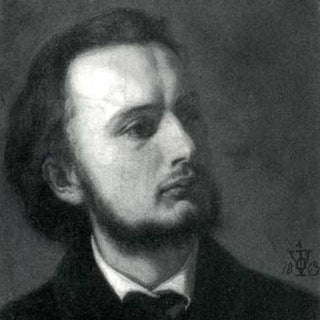
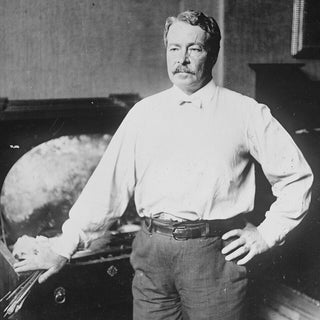
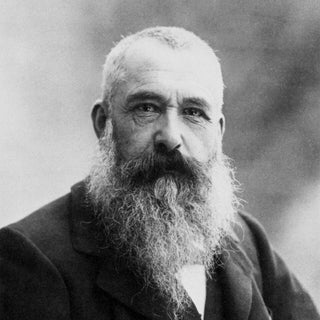
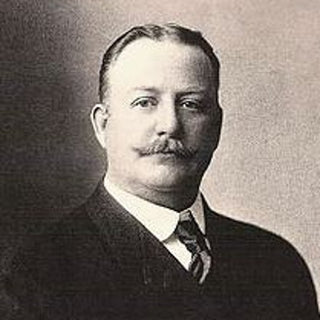
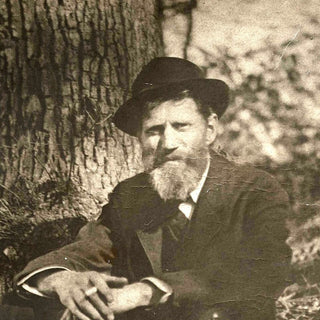
Søren Emil Carlsen was born in Copenhagen in 1848. He studied architecture at the Royal Danish Academy of Fine Arts for four years, then emigrated to the United States in 1872 and settled in Chicago. (He later gave his birth year as 1853, and that date still appears in some sources.)
In Chicago he worked as an architect's assistant and studied painting with the Danish marine painter Lauritz Holst. When Holst went back to Denmark, he left his studio to Carlsen. Carlsen made rapid progress, and became the first teacher of drawing and painting at the Chicago Academy of Design. Wanting more training, he went to Paris, where he admired the still lifes of the eighteenth-century painter Jean-Siméon Chardin. Chardin's simple kitchen objects and quiet, glowing surfaces would shape Carlsen's art for the rest of his life.
Carlsen spent much of his career in New York. Money was often tight, and in the early years he sold still lifes through dealers and worked as a teacher. He taught for more than forty years, in Chicago, San Francisco, where he directed the San Francisco School of Design for a time, and at the National Academy of Design in New York.
His still lifes are spare and meditative: copper pots, porcelain, fish, onions and brass vessels arranged on a table, set in soft light against plain dark or neutral backgrounds. Critics often compared them to Chardin. Fishing Boat on Shore (1885) and Hearthstone (1922) in our collection show the two ends of his career, from his early realist marine work to a mature, contemplative interior.
Around 1900 Carlsen widened his range to landscapes and seascapes, painted in a delicate, tonal style related to Impressionism. He spent summers in Falls Village, Connecticut, and worked in the art colonies of New England. His later paintings of the sea and sky are pale, quiet, almost mystical. The South Strand (around 1909) and Meadow Brook (1905) are examples from this period.
He won many of the most important prizes in American art and was elected to the National Academy of Design. His son Dines Carlsen was also a painter, and they sometimes exhibited together.
Carlsen died in New York in 1932. His work is held by the Metropolitan Museum of Art, the Smithsonian American Art Museum, the Art Institute of Chicago and the National Gallery of Art.
 Vincent van Gogh
 Claude Monet
 Gustav Klimt
 Winslow Homer
 John Singer Sargent
 Mary Cassatt
 Alphonse Mucha
 William Merritt Chase
 Childe Hassam
 Frederic Remington

 Snow & Moving Water · from $59
 Homer’s Atlantic · from $109
 Van Gogh in Colour · from $119
 Monet’s Changing Light · from $79
 Coastal Calm · from $109
 Harbour Days · from $59
 The Kitchen Table · from $79
 City Walks · from $119
 The Portrait Salon · from $109
 Early Modern Colour · from $79
 Blue Hour · from $119
 Golden Fields · from $109
 Field & Farm · from $59All gallery walls ›